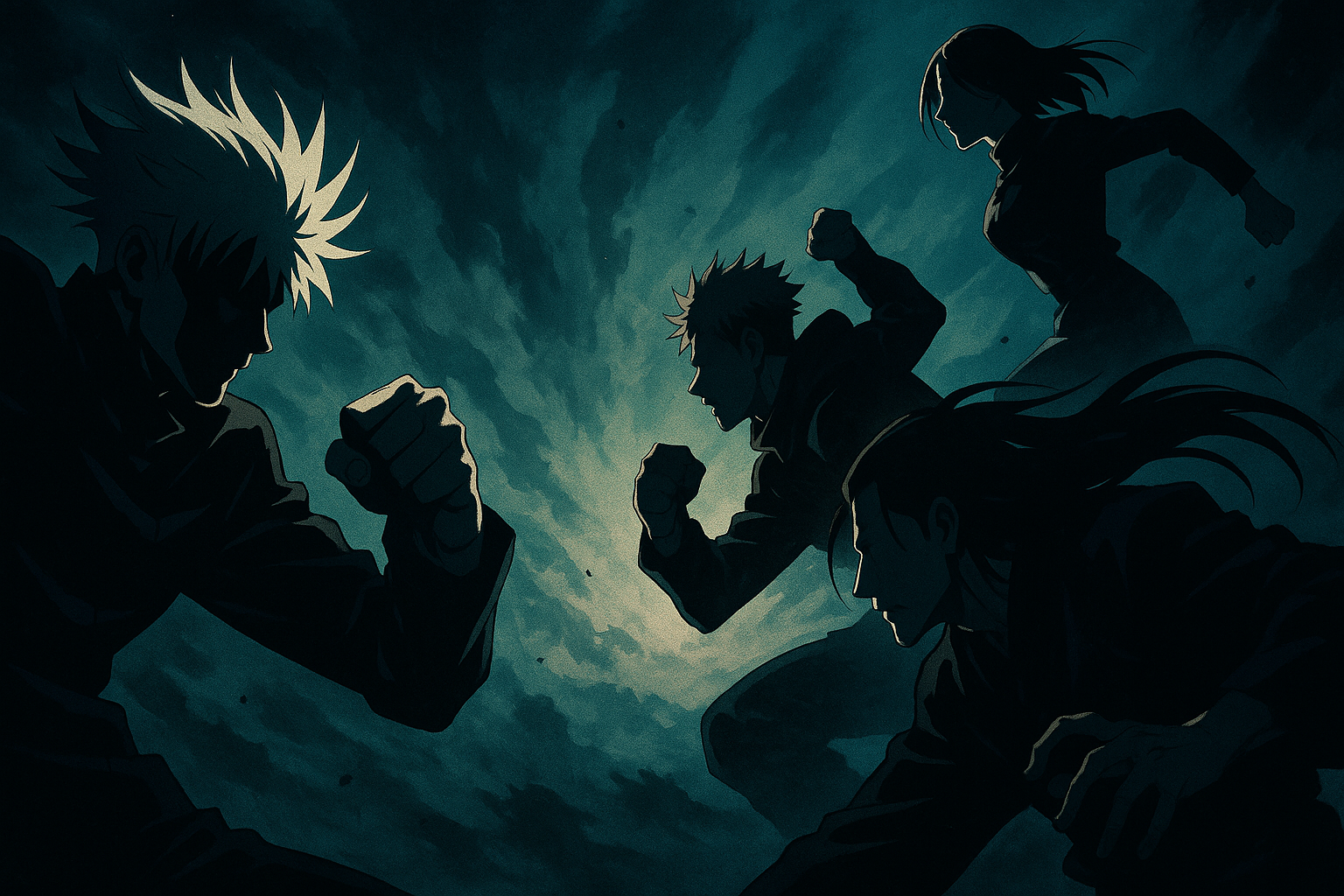
From spectacle to strategy: why the Culling Game arc is Jujutsu Kaisen’s most audacious gamble yet
When Jujutsu Kaisen exploded onto the global scene, it did so on the strength of two core promises: visceral, inventive fights and a cast that blends tragic stakes with combustible charisma. Seasons 1 and 2 delivered both in spades, but the jump into the Culling Game arc feels different in kind. It’s not just another long story beat. It’s a structural reset — a shift from high-stakes duels and character-defining fights to an extended, sprawling tournament that forces the series to answer bigger questions about what it means to be a sorcerer, how systems of power calcify, and how a story sustains thrill across bloat-prone narrative “arcs.”
The basics: what the Culling Game is (without heavy spoilers)
For viewers who haven’t read the manga, the Culling Game is a tournament-style conflict that upends the world of the anime by institutionalizing chaos. It’s longer than any single arc before it, it reconfigures major players’ goals, and it layers complex rules over a rapidly expanding cast. The arc is structurally dense — multiple factions, shifting alliances, and a ruleset that creates unpredictable incentives — which makes it fertile ground for both narrative payoff and potential pacing pitfalls.
Why it’s the right move (from a storytelling perspective)
1) Stakes that scale without losing personal stakes
Previous arcs raised stakes by deepening personal conflict: characters grow, lose, and change in ways that feel intimate even when city-shattering events happen. The Culling Game scales differently. It threatens the social fabric of the series’ world rather than only its protagonists. That raises the dramatic stakes from “will our heroes win this fight?” to “what does society look like if the rules break?” For a long-running series that’s always flirted with existential and moral questions, this helps the story evolve beyond personal vendetta plots into something with socio-political bite.
2) A rules-driven framework that rewards creativity
The Culling Game’s mechanics — entry conditions, special constraints, and win conditions — create a playground where writers and animators can innovate. Rules in tournament arcs aren’t a straightjacketing limitation; they are creative prompts. They force characters to improvise and compel the showrunners to find new ways to stage conflict and reveal character. When rules are cleverly designed, the arc becomes less about who is strongest and more about who best adapts — and that’s a compelling watch if handled right.
3) Space to develop secondary characters
Long arcs risk bloating the main plot at the expense of side characters. The Culling Game flips that problem into an advantage by creating micro-fronts across the map. Secondary characters get sequences that matter, which deepens the world and makes fan investment more durable. Fans who rooted for side players now get meaningful payoffs, which is crucial for sustaining franchise energy across seasons and spin-offs.
Where the risk is highest (and why fans are nervous)
1) Pacing and narrative fatigue
A tournament arc that stretches on without consistent emotional payoffs can exhaust an audience. The manga’s length and complexity mean that adaptation must choose pacing carefully: which beats to dramatize, which to compress, and which to cut. Long arcs can feel like filler if episodic momentum stalls. The anime studio must resist treating the arc as a conveyor of set-pieces and instead focus on tying dramatic revelations to character growth.
2) Animation workload and quality variance
Jujutsu Kaisen’s brand is tied to kinetic, high-quality fights. The Culling Game introduces scenes that are logistically complicated: large crowds, multiple simultaneous small-scale fights, and intricate cursed techniques. Maintaining consistent visual quality across this scope is expensive and time-consuming. Fans are understandably wary: if animation dips during key revelations, the emotional impact will lessen.
3) Managing fan expectations and spoilers
Because the arc was so influential in the manga, the anime must manage viewer expectations — both from newcomers and manga readers. Balancing faithful adaptation with smart structural changes is difficult. Reveal scheduling and the handling of major character beats must satisfy manga readers while keeping newcomers engaged and surprised.
What the anime adaptation must do to succeed
1) Lean into character perspective
Even during sprawling events, grounding sequences in a character’s emotional experience keeps viewers invested. The anime should use POV-driven episodes — focusing on a single character or pair of characters — to make the macro conflict feel intimate. That helps maintain the franchise’s core strength: memorable, human-centred stakes.
2) Prioritize choreographic clarity in fights
With many fights happening in parallel, clarity is king. The animation must communicate stakes, rules, and consequences clearly: silhouette, color, and camera language can distinguish simultaneous encounters. Strategic editing — brief intercuts that orient the viewer — will make the difference between exhilarating and chaotic.
3) Use the rules to generate tension
The Culling Game’s rules are an asset. The anime can make them part of the suspense engine — a reveal of a rule change should carry weight and shift the audience’s predictions. When the rules feel alive (and consequential), the arc becomes a series of strategic puzzles, not just brawls.
Fan reaction: uproar meets awe
Reaction online reveals the arc’s double life: people are hyped for the highs and terrified of the lows. For manga readers, the arc’s revelations are part of the reward — adapted well, they will be hall-of-fame moments. For anime-only watchers, the arc’s complexity can be a barrier. The anime has to be both explanatory and efficient: offer enough context to keep newcomers in the loop while preserving the shock of key moments.
Long-term franchise implications
If the adaptation nails the Culling Game, Jujutsu Kaisen will have done something many shonen properties fail at: evolve tonally while preserving its core. It would show the franchise can sustain long-form storytelling and expand its world in a way that earns future seasons, movies, and spin-offs. If it stumbles, it might still enjoy commercial success, but the fanbase’s enthusiasm could fracture, making future entries harder to sell as must-see events.
Conclusion: a gamble worth watching
The Culling Game arc is a narrative and production gamble: it’s ambitious, risky, and full of potential. Its success hinges on pacing discipline, animation consistency, and the ability to make rules feel dramatic. If the anime navigates those demands, it won’t just be another season — it’ll be a turning point that proves Jujutsu Kaisen can scale from thrilling fights to thematic, system-level drama, and keep fans hungry for more.
Sources:
– Crunchyroll News — “JUJUTSU KAISEN Season 3 Anime Kicks Off Culling …” (release and production notes): https://www.crunchyroll.com/news/latest/2026/1/8/jujutsu-kaisen-season-3-anime-creditless-opening-ending-videos
– Polygon — “The Culling Game begins as Jujutsu Kaisen season 3 gets official release date”: https://www.polygon.com/jujutsu-kaisen-season-3-release-date-culling-game/
– Radio Times — “Jujutsu Kaisen season 3 release schedule: When are new episodes out?”: https://www.radiotimes.com/tv/fantasy/anime/jujutsu-kaisen-season-3-release-schedule/
– Wikipedia — “Jujutsu Kaisen season 3” (summary & broadcast info): https://en.wikipedia.org/wiki/Jujutsu_Kaisen_season_3
– Otakukart — “Jujutsu Kaisen Season 3 Why MAPPA’s Culling Game Arc Is Breaking the Internet Right Now”: https://otakukart.com/jujutsu-kaisen-season-3-why-mappas-culling-game-arc-is-breaking-the-internet-right-now/