Witch Hat Atelier: Why the New Anime Premiere Feels Like Magic Reclaimed
Introduction
Witch Hat Atelier arrived on screens this spring with an adaptation that’s already being talked about beyond the usual anime circles. Adapted from Kamome Shirahama’s slow-burning, detail-rich manga, the anime’s premiere demonstrates what happens when a production treats worldbuilding and craft with reverence rather than spectacle. This deep dive unpacks why the show matters now: its unique magic system, the way it reframes apprenticeship and authorship, the art and animation choices that echo the manga’s textures, and what the series might mean for the medium’s direction in 2026.
A different kind of magic
Witch Hat Atelier doesn’t sell itself on flashy power-ups. Its core premise is deliberately analogue: magic works through precise glyphs and the painstaking learning of forms. Spells are written and drawn; mistakes matter. That design immediately sets the series apart from the typical shonen/isekai fare where power is often an innate trait or a flashy external force. Here, power is a craft, and craft implies apprenticeship, failure, and iteration.
That structural choice reframes stakes. When a character miscopies a rune the wrong way, the consequences are practical and intimate — a botched charm, a burned circle, a living broom with a mind of its own — not an abstract surge of energy. That focus on small, grounded consequences makes the story feel human. It’s less about escalating combat and more about mastery and responsibility.
From page to frame: art that keeps the soul
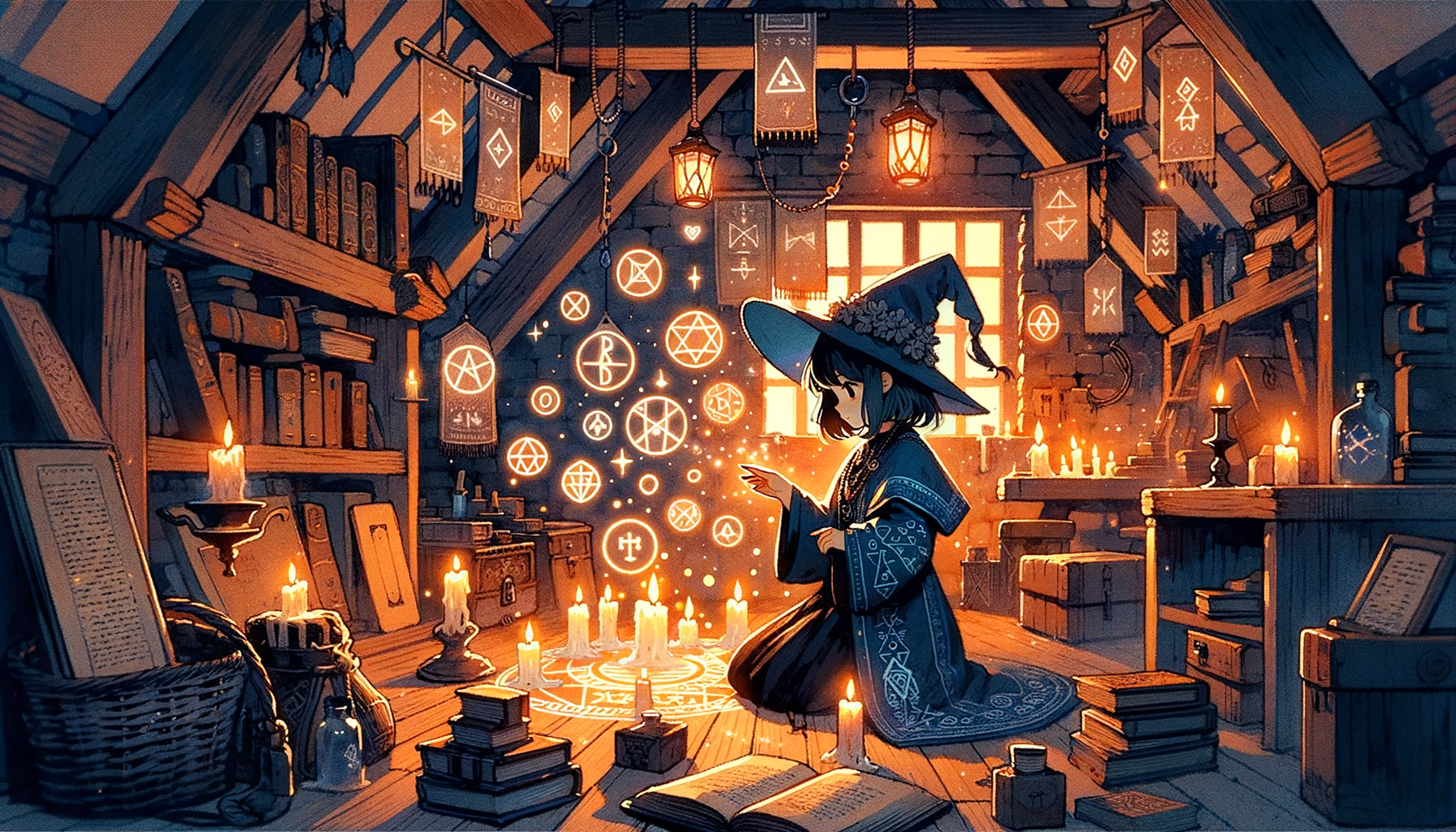
Kamome Shirahama’s manga is distinctive: ornate linework, soft cross-hatching, and a taste for baroque compositions. Translating that to animation is non-trivial. The premiere leans into that difficulty rather than masking it. Backgrounds are rendered with tactile detail; the palette favors warm candlelight and dusty inks; camera moves are careful, often lingering on hands sketching runes or on the flecked edges of an open grimoire.
The production wisely avoids hyperactive motion in favor of paced sequences that mirror the manga’s cadence. This restraint is an aesthetic choice that rewards patient viewers and foregrounds the everyday labor of magic. The visual decision to emphasize materiality — paper grain, ink bleed, the weight of a book — gives the show an artisanal feel missing from much modern anime.
Apprenticeship as narrative engine
At the heart of Witch Hat Atelier is an apprenticeship story: young protagonists, mentors, guilds, and a pedagogy of mistakes. The anime captures the emotional texture of learning — the humiliation of failure, the elation of small breakthroughs, the long arc of craft. Where many shows treat training as montage, here instruction is a scene in itself.
This focus also changes who the story is for. While action-oriented anime court the thrill-seeker, Witch Hat Atelier invites viewers who value process — artists, makers, writers, and anyone who remembers the small victories of a craft learned slowly. That’s a potentially large and underserved audience.
Worldbuilding by constraint
One of the series’ greatest strengths is how it establishes rules and then explores their social consequences. If magic is a written, reproducible technology, who controls it? The anime begins to show the politics: guilds, licensing, secrecy, and the social stigma around forbidden knowledge. Those constraints give rise to ethical dilemmas that feel contemporary — surveillance through spellcraft, gatekeeping, and the commodification of knowledge.
By framing the world around constraints rather than limitless potential, the series creates a sandbox for subtle conflict. It’s less about finding the next power-up and more about navigating institutions and the ethics of expertise.
Sound, score, and tone
The premiere’s sound design leans into texture. Foley — the scratch of quills, the rustle of parchment, the soft chime of glyphs — defines much of the episode’s atmosphere. The score complements rather than dominates; acoustic instruments and sparse piano motifs ground the scenes and leave room for silence. These choices reinforce the show’s core value: attention to craft.
The production’s restraint extends to pacing and narrative economy. Scenes bleed into one another more like chapters in a book than individual set pieces. That can be a risk in mainstream slots, but it’s also the reason Witch Hat Atelier can inhabit a unique space in the season.
Why this adaptation matters now
In 2026, the anime landscape is crowded with remakes, long-running shonen hits, and high-budget spectacle. Witch Hat Atelier’s premiere is a reminder that animation can be a medium for subtlety and tactile artistry. It demonstrates there’s appetite for animation that centers craft, process, and quiet stakes.
There’s also an industry message. Successful adaptations that hold onto an original manga’s texture (rather than flattening it to trendier aesthetics) validate the approach of commissioning teams willing to slow down and invest in faithful visual translation. This can encourage studios to greenlight projects with delicate source material rather than defaulting to formulaic, easy-to-localize properties.
Potential pitfalls and watch points
No adaptation is perfect. The anime risks alienating viewers who expect faster plot acceleration or more action beats. Pacing will be the biggest challenge across cour arcs. Additionally, the show’s visual restraint may be misinterpreted as low energy in marketing thumbnails and short clips — making early promotion a delicate task.
Watch for how the adaptation manages escalation without betraying its premise. If later episodes inflate the magic into spectacle, the show could lose the very thing that made it special. Ideally, the series uses spectacle sparingly and always with a grounding in the rules the show sets up early on.
Where the story could go (and why that matters)
There’s rich potential in exploring different social strata affected by rune technology: smugglers weaponizing forbidden glyphs, amateur crafters forming underground study circles, or guild bureaucrats who treat magic as IP. Character arcs could examine the emotional labor of teaching and the ethics of gatekeeping knowledge.
If the series leans into those themes, it will become not just a story about magic but a commentary on how knowledge is produced, controlled, and shared — a motif with clear resonance in a moment defined by AI, information control, and debates about access to expertise.
Final thought
Witch Hat Atelier’s premiere is an encouraging sign for anime that chooses intimacy over expansion, craft over spectacle. The show is already making a case for a different mode of animated storytelling: one that rewards attention, honors material process, and trusts audiences to value the subtle. If it maintains that discipline, it could become a touchstone for the kind of tactile, human-centered anime more viewers are starting to crave.
Sources
– Kamome Shirahama, Witch Hat Atelier (manga)
– Coverage and reviews of the anime premiere (April 2026) from major anime outlets and news sites
– Interviews and production notes (where
Sources:
– https://gamerant.com/april-2026-best-new-anime/
– https://anitrendz.net/news/2026/04/13/crunchyroll-manga-adds-hinomaru-sumo-blooming-love-gizmo-riser-more-titles-in-april-2026/
– https://itsreleased.com/anime-news-weekly-april-2026/
– https://comicbook.com/anime/list/10-new-spring-2026-anime-to-watch-this-april-ranked-by-hype-level/